Merak and Sakteng Trek in Trashigang
This Merak & Sakteng Trek is 14 days Bhutan tour package combined with 6 days best eco trek in Bhutan. Merak & Sakteng stands out as a distinct attraction in Bhutan. Unlike anywhere else in the country, it offers a visitor to experience a unique semi-nomadic lifestyle, culture and vernacular in one of the most scenic pastoral valleys in the protected area of Sakteng Wildlife Sanctuary (SWS) in Trashigang Dzongkhag (District), in Eastern Bhutan. A signage describing the location, altitude, forest type, fauna, additional hiking trails in the locality, distance and time to next camp welcomes a visitor to each campsite. Book Merak and Sakteng Trek with BhutanHighend Tours. Merak and Sakteng Trek. 6 Days Eastern Bhutan Trek.
Places You’ll Visit
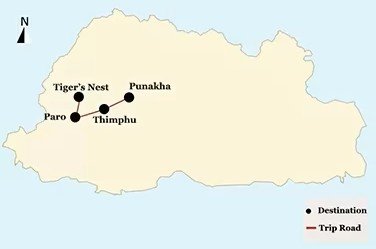
Fly on the wings of the Dragon to Bhutan, on arrival in Paro International Airport, complete the immigration formalities and exit through only one arrival gate where BHT dedicated team who will be holding placard, no one will be missed. We welcome with khaddar and proceed to Thimphu which will take about an hour and half. The route will follow Paro River until Chuzom from where we will bend towards Thimphu river taking us to the heart of capital city Thimphu. The entire stretch of drives is very scenic and picturesque as we pass by some of the beautiful villages of Bondey, Shaba, Isuna etc until we enter welcome gate in Thimphu. Visit the weekend market (Thu-Sun): An interesting well organized permanent set of stalls built for vegetable vendors across the country. It’s open from Wednesday to Monday and closed on Tuesdays. One can find wide range of local vegetables and fruits. Other side of the river is place for indigenous goods and handicrafts section, where locally produced goods, including religious objects, cloth, baskets and hats etc from various minority groups are sold here. These shops are open from Friday to Sunday only. In the evening we will explore the city by walk: If time permits, walking through the city gives you immense joys and understanding of modern city. Good option for imported garments and local souvenir, beside unique local handicrafts. Thimphu offers mixed style of personalities. Take the street walk in Thimphu- only city in the world without traffic lights. Visit Tashichho Dzong: Houses the throne room of His Majesty the King of Bhutan and government secretariat buildings, beautiful arts and crafts, built in 17th century. Visitors are open for an hour in the evening and closed during official meeting or gathering. Overnight in Thimphu, altitude 2400m
Thimphu- This bustling little city is the main centre of commerce, religion and government in the country. Thimphu is the most modern city with an abundance of restaurants, internet cafes, nightclubs and shopping centers. However it still retains its cultural identity and values amidst the signs of modernization, often referred as world only city without traffic lights. Cheri Monastery: In 1627 the first Buddhist Monastic School for Bhutan was started by Shabdrung in Cheri, which to these days has become a Meditation center for higher level Buddhist studies. The Monastery buildings are old and still contains many sacred relic from past. Drive pass by Memorial Chorten: It is located close to the center of Thimphu city and is one of its most iconic monuments. Visitors will find elderly Bhutanese people circumambulating the Chorten throughout the day. The National Memorial Chorten was built in memory of Late Third King of Bhutan and dedicated to World Peace. Third King is regarded as father of modern Bhutan. Visit Buddha viewpoint: The Buddha Dordenma is located at a top of the hill in Kuensel Phodrang Nature Park and overlooks the southern entrance to Thimphu valley. Changangkha Lhakhang: Changangkha Lhakhang is located at the lower part of Motithang in upper Thimphu, on a small hill overlooking the Thimphu Town below. The main relic of Changangkha Lhakhang is the Chenrigzi in an 11 headed thousand arms manifestation. Visit textile museum: The National Textile Museum which opened in June 2001, is worth a leisurely visit to get to know the living national art of weaving. Changing exhibitions introduce the major weaving techniques, styles of local dress and textiles made by women and men. The small shop features work from the renowned weaving centers in Lhuntshe Dzongkhag, in north-eastern Bhutan. Each item is leveled with the name of the weaver and price. The textile museum’s exhibition are centered around six major themes – warp pattern weaves, weft pattern weaves, role of textiles in religion, achievements in textile arts, textiles from indigenous fibres and the royal collection. Overnight in Thimphu
Start the most scenic drive to Punakha from Thimphu over dochula pass which takes about two hours. After the break at Dochula, the road descends into Wangdue and Punakha taking us to one of the warmest places of Bhutan. Dochula pass 3150m: The pass is at a popular location as it offers a stunning 180 degree panoramic view of the Great Himalayan mountain ranges. The view is especially scenic and very clear on winter days with snowcapped mountains forming a majestic backdrop to the tranquility of the 108 chortens gracing the mountain pass. Visit Lamperi Botanical Garden: The park has many varieties of plants, herbs, birds and animals. If you visit between April and June, you can find about 38 out of Bhutan’s 46 species of rhododendrons and spot some of the 220 species birds. This park is one of the must visit place for birds and nature lovers. You may enjoy the hot packed lunch here if you had planned picnic. Visit the most beautiful Punakha Dzong: Built in 1637 by Zhabdrung Ngawang Namgyal, the Dzong was named Druk Pungthang Dechen Phodrang (Palace of Great Happiness). Punakha is still the winter residence of Je-Khenpo religious head of Bhutan. King Jigme Dorji Wangchuck convened the first National Assembly here in 1952. This is one of the finest and must see Dzongs of Bhutan. The Dzong stands inbetween meeting point of two rivers, Phochu and Mochu making the most photogenic Dzongs of Bhutan. Enjoy the walks on the suspension bridge: Punakha suspension bridge is considered one of the longest of its kind in Bhutan. The bridge connects the dzong with the villages Shengana, Samdingkha and Wangkha on the other bank of the Po Chhu river. In these small villages, locals sell their wares in tiny, traditional shops. Visitors can stop here for a quick and authentic view of true Bhutan. In order to access the suspension bridge from the dzong, one must walk past the King’s palace and the cremation ground. Join the nuns for evening prayer at Sangchen Dorji Lhendrup nunnery: Sangchen Dorji Lhendrub Choling is located above Wolakha on the way to Drolay Goemba which serves as a Shedra (Buddhist College) and meditation center scatter the grassy site, home to a small and friendly community of nuns. Overnight in Punakha, altitude 1350m
As we proceed to Paro, we will retrace the journey crossing over Dochula, up until Chuzom and further to Paro. The entire stretch of drive will refresh your mind and give you second chance to enjoy the great snowcapped mountain views of the Himalayas from Dochula. Hike to Chimi Lhakhang, the temple of fertility: This temple is known as the temple of fertility. It is widely believed that childless couples can visit this temple to pray for better fertility to conceive the child. There are stories and incidences that many visitors dream came true however one must truly need to believe and follow the lama’s instruction. The hike through the lovely villages of Mesina gives truly amazing experience. Enjoy the gentle walks from the road head. Visit 17th century Paro Dzong: ‘Fortress on a Heap of Jewels’, is ranked one of the best Bhutanese architecture. The massive buttressed walls that tower over the town are visible throughout the valley, particularly when landing at Paro Airport. The Dzong also offers administrative seat of the district of Paro. The Dzong was built in 1644 under the order of Zhabdrung Ngawang Namgyal. Ta Dzong unique national museum: Perched above Paro Dzong it was watchtower built in 1649 to protect the undefended Paro Dzong located below, renovated in 1968 to house the National Museum. Today this museum houses the best collections of all time historical items making worth for a visit. Enjoy outdoor activities wearing Gho/Kira, play archery: Nicely made and well maintained activity place attached to whole sell Buddha statue store, offers wearing Bhutanese dress, playing archery and darts for guests visiting Bhutan. The center is maintained and operated by BHT herself and its free of cost for all BHT guests. Overnight in Paro, altitude 2200m
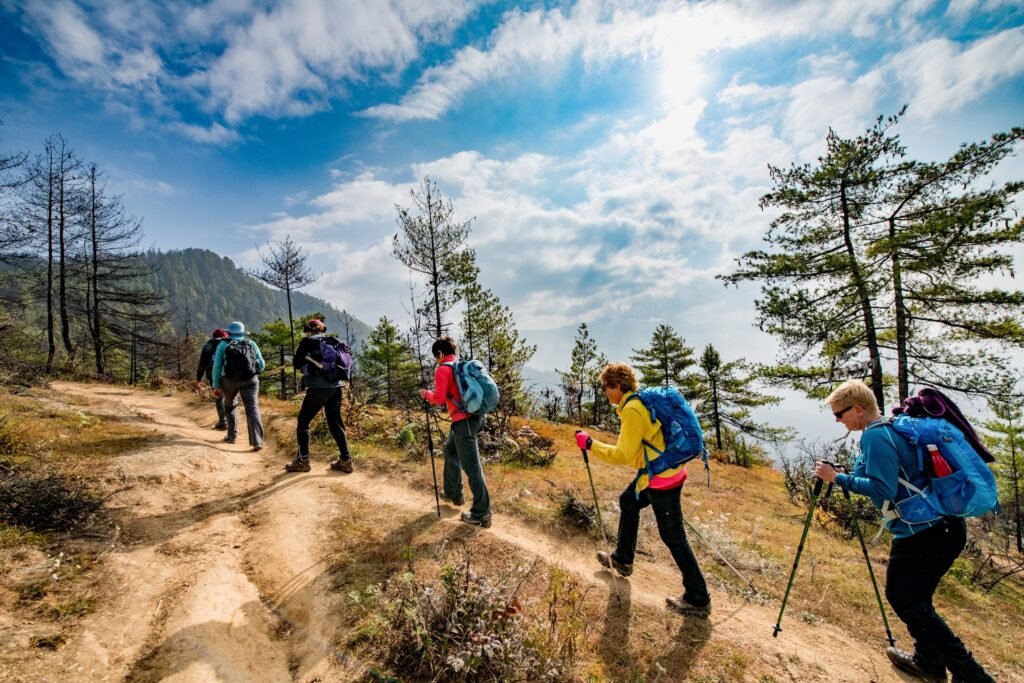
This picturesque region in the kingdom is covered in fertile rice fields and has a beautiful, crystalline river meandering down the valley. Paro has more of historical sites, high-end tourist resort and many souvenir shops for shopping including world famous Takstang. Taktsang Monastery (Tiger Nest Temple): is Bhutan’s most iconic landmark and religious Buddhist site in the world. The name Taktsang translates to “The Tiger’s Nest”. The temple is one of the holiest sites in Bhutan which clings impossibly to a sheer cliff face 900 meters above the valley. Although good trekkers can make it to the top in two hours, most of the guests take whole day to complete the hike. Kyichu Lhakhang: Temple considered sacred Jewel of Bhutan was established by the Buddhist King Songstsen Gampo of Tibet to overcome the giant ogress that laid across Tibet and Himalayas preventing the spread of Buddhism. The king is believed to have built the temple at the left foot of the enormous ogress. Kichu Lhakhang was among 12 temples in Bhutan out of 108 temples said to have been constructed over single night. Kichu Lhakhang was initially small in size however later, the temple expanded both in grandeur and size to its form that we see today. Hot stone bath with dinner at the farmhouse: Hot stone bath is very unique which offers great medicinal values. In most cases, the bathtub is made of wood, placed on a ground level in quiet hut for the privacy. A couple can get into one bathtub to soak. Enjoy the great ancient techniques of curing body aches, joint pains and harness many other values. This is on additional cost check with guide/driver. Overnight in Paro
The flight from Paro to Yonphula Airport (Trashigang) is beautiful over the mountains. Yonphula Airport: This is one of the four airport in Bhutan. It resembles the table top airport of Lukla Airport in Nepal. Trashigang Dzong: It was built in 1659 to defend against Tibetan invasions. This imposing fortress is strategically situated high atop a spur overlooking the Dangmechu River. Explore the little Tashigang town. Overnight in Trashigang, altitude 1400m
The trek to Merak will start from Chaling and the feeder road goes up to Chaling from Rangjung. The feeder road from Rangjung to Chaling is about 15 km which takes about 1 hour by car. The first halt will be at Damnongchu. Damnongchu camping area is located after Mindrula which lies about 10,880 ft above sea level.
The trail from Damnongchu to Merak goes along the river bank with gradual ups and downs. The final stretch is a very gentle incline after which you enter Merak village. The campsite, located before the village, has spectacular views of the nearby mountains and the village. There is also a guesthouse where tourists can stay if they choose not to camp.
The trek from Merak to Miksa Teng is of medium difficulty. It will pass through the beautiful Nagchungla pass. Right after the Nagchungla pass descends, the trek is mostly along the river and there is a small climb before reaching the village of Sakteng. The campsite is located in a clearing surrounded by rhododendron trees. It is beautiful when the flowers are in full bloom.
Trek to Sakteng from Miksa Teng is easy making your way through beautiful woods with a short climb before reaching Sakteng but it is not very difficult. If lucky, trekkers may be able to spot a red panda among the trees. The Sakteng campsite is located on the outskirts of the village. Sakteng also offers trekkers the option of spending the night in a guesthouse instead of camping.
Sakteng to Jyonkhar Teng trek is an easy trek compared to the previous treks. It is mostly downhill and walking on a plain path. Some trekkers can also make it to Phongmay or Radhi but a halt in Jyonkhar Teng is recommended. Jyonkhar village is located a few minute’s walk from the campsite. Jyonkhar also has a community school. Jyonkhar Teng campsite is located near a river.
Phongmay and Radhi have many attractions and beautiful villages in these two places. Radhi, popularly known as the ‘Rice Bowl” of the east is also popular for wool textiles called Bura weaving. After the trek, we will relax in our hotel. Overnight in Ranjung/Tashigang.
The journey from Trashigang to the plains of Samdrup Jongkhar is picturesque and breathtaking. The drive is mostly through the deep forest, small curves, and few little villages. The drive ends with a view of the plains of India and descending in the warm plains of Bhutan India border town. Overnight in Samdrup Jongkhar, altitude 173m
Departure from the Kingdom of Bhutan
- Unbeatable Value Assurance - ( Discover extraordinary adventures )
- Effortless Reservation Process - ( No booking hassles )
- Transparent Pricing, Zero Surprises - ( No hidden costs )
- Expertise Beyond Measure - ( Team of seasoned experts )
- Your Joy, Our Priority - ( Happiness Commitment )
Official Trek Map