
Ancient Trans Bhutan Route Adventure Journey – Experience Bhutan’s Timeless Heritage Across Forest Trails, River Valleys, and Historic Trade Corridors
Ancient Trans Bhutan Route 10 days itinerary which covers half of the trans Bhutan trail is one of the best mixtures of handpicked programs before enjoying this ancient trail. The ancient trans Bhutan route is one of the most adventurous and tough hiking trails used by Bhutanese ancestors around 500 years ago. Let us experience it once.
Places You’ll Visit
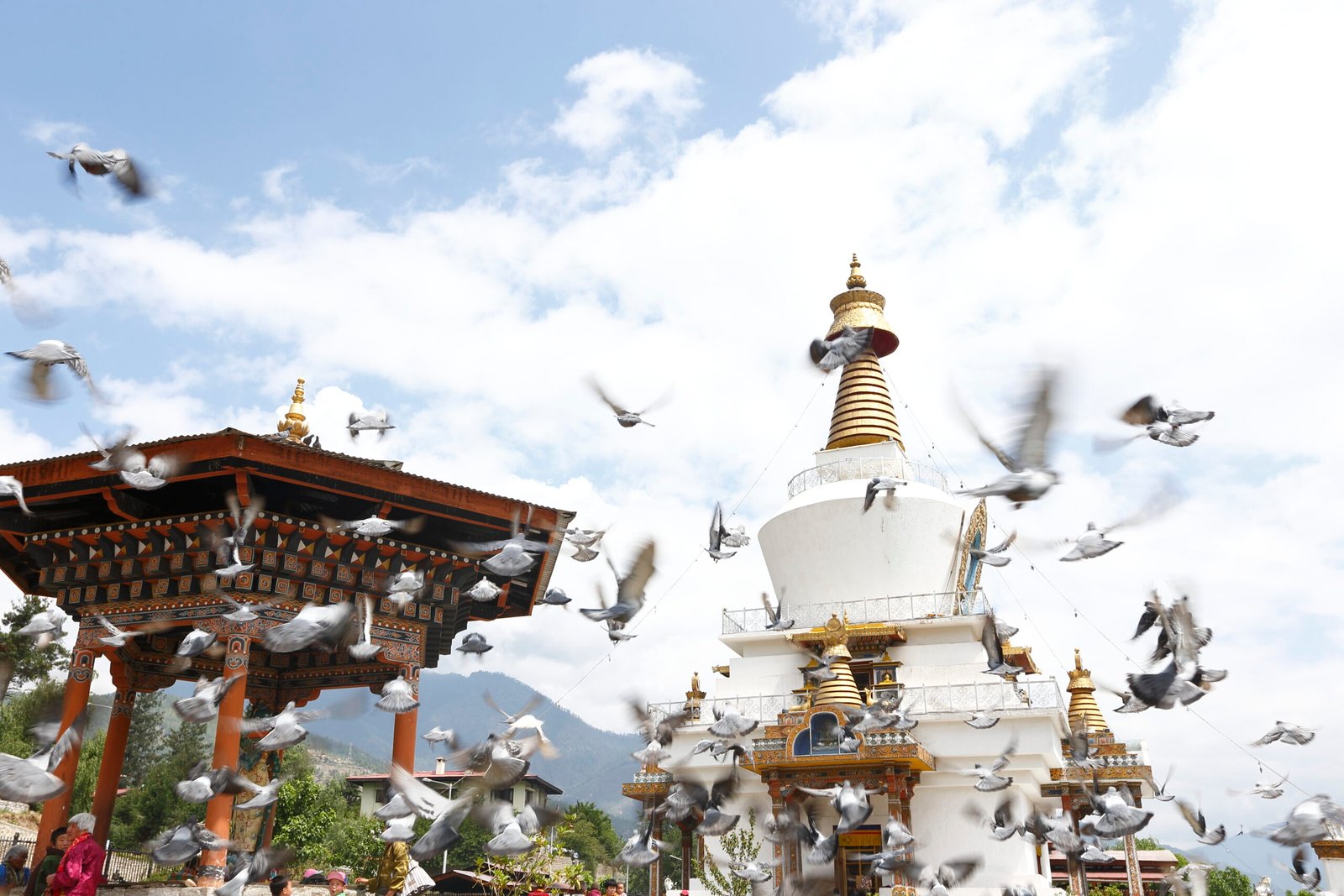
Fly on the wings of the Dragon to the heart of Himalayas at Paro, the only International Airport in Bhutan. After the immigration formalities, exit through single arrival gate where Bhutanhighend tours dedicated team will receive you. You will see the person holding the placard on the booking name or in the name of the company. Settle down in the comfortable car and proceed to Thimphu – the modern capital city of Bhutan. The memorable very first day drive will follow banks of Pa Chu river and Wang Chu river until we reach our destination for the night. The drive passes through most picturesque villages of Paro, beautiful river confluence called Chuzom, few more villages of Thimphu and gradually into the city of majestic hills, mixed with amazing arts and architecture making the largest city of the tiny Himalayan Kingdom. Visit Buddha viewpoint: The Buddha Dordenma is located at a top of the hill in Kuensel phodrang Nature Park and overlooks the southern entrance to Thimphu valley. Drive pass by Memorial: It is located close to the center of Thimphu city and is one of its most iconic monuments. Visitors will find elderly Bhutanese people circumambulating the Chorten throughout the day. The National Memorial Chorten was built in memory of Late Third King of Bhutan and dedicated to World Peace. Third King is regarded as father of modern Bhutan. We will explore the city by walk: If time permits, walking through the city gives you immense joys and understanding of modern city. Good option for imported garments and local souvenir, beside unique local handicrafts. Thimphu offers mixed style of personalities taking the street walk in Thimphu- only city in the world without traffic lights. Overnight in hotel in Thimphu, altitude 2400m
Start the most scenic drive to Punakha from Thimphu over dochula pass. Dochula pass: The pass is at a popular location as it offers a stunning 180 degree panoramic view of the Great Himalayan mountain ranges. The view is especially scenic and very clear on winter days with snowcapped mountains forming a majestic backdrop to the tranquility of the 108 chortens gracing the mountain pass. You will join the Trail this morning at Dochula Pass, some 3,100 metres (10,170 feet) above sea level. At clearer times of the year, you will be able to enjoy panoramic views of the Himalayas to the north from Dochula. From here, descend down into the adjacent valley and join what is known as the ‘Divine Madman Trail’. You will now be following in the footsteps of the Divine Madman himself, Drukpa Kuenley, when he came to Bhutan from Tibet in the 16th century to fulfill his legacy of suppressing evil energies through his dharma teachings. During your trek today, your guide will share some of the extraordinary stories which relate to the lama’s colourful life. Make a stop at Thinleygang Lhakhang (temple) before enjoying a traditional Bhutanese lunch cooked in a local farmhouse. After lunch, rejoin your vehicle and head east towards Punakha. Punakha Dzong: Built in 1637 by Zhabdrung Ngawang Namgyal, the Dzong was named Druk Pungthang Dechen Phodrang (Palace of Great Happiness). Punakha is still the winter residence of Je-Khenpo religious head of Bhutan. King Jigme Dorji Wangchuck convened the first National Assembly here in 1952. This is one of the finest and must see Dzongs of Bhutan. The Dzong stands inbetween meeting point of two rivers, Phochu and Mochu making the most photogenic Dzongs of Bhutan. Visit Punakha Suspension Bridge: Punakha suspension bridge is considered one of the longest of its kind in Bhutan. The bridge connects the dzong with the villages Shengana, Samdingkha and Wangkha on the other bank of the Po Chhu river. In these small villages, locals sell their wares in tiny, traditional shops. Visitors can stop here for a quick and authentic view of true Bhutan. In order to access the suspension bridge from the dzong, one must walk past the King’s palace and the cremation ground. Overnight in hotel in Punakha, altitude 1350m
After breakfast, rejoin your vehicle for a transfer to Pelela, where you will rejoin the Trans Bhutan Trail. Pelela Pass: Pelela Pass is the gateway to Central Bhutan. Pele La pass has a chorten and prayer flags fluttering across the hills. It is one of the highest mountain passes at an elevation of 3423m. The pass takes over Black Mountain, the boundary between Western and Central Bhutan. If the weather is clear, one can see the view of Jomolhari, Jichu Drakey, and Kang Bum to the West from the road. It is a good stop for taking pictures. Stop in a traditional farmhouse in the village of Rukubji to enjoy a hot lunch, before visiting Rukubji’s village Lhakhang (temple), also known as Kuenzang Choling. It is thought that this temple was built some 300 years ago by a Lama named Tshendhen Duelwa. Unlike most temples, it is not built on a ridge with a view out over a valley, but rather on an extended plateau and close to two rivers: the reason for this is that the Lama built the temple on top of the head of a snake-demoness which he subdued in the same location. Rukubji is also famous for its unique local language, and you will have the chance to learn about this during your time here. Afterwards, rejoin the trail for a gentle climb out of the valley then through a forest, before dropping back down the village of Chendebji. Chendebji Chorten: Located at 2430m, built in the style of the great Bodhanath Temple of Nepal, and was constructed by Tshering Wangchuk son of Yon-Say and the Mahasiddha Zhidag in accordance with the prophecy of the second Gangteng Tulku Tenzin Lekpai Dhundrup in order to subdue harmful demons. At Chendebji, you will rejoin your vehicle for a road transfer to the town of Trongsa. Overnight in hotel in Trongsa
: This is the largest Dzong (fortress) in Bhutan, located in the centre of the country. The Dzong is beautifully built on a spur overlooking the gorge of the Mangde Chhu River. The Dzong played very crucial role in the ancient history in protecting Bhutan and its sovereignty. The ruler of Trongsa Dzong was the most powerful leader to form Wangchuk Dynasty in the Kingdom of Bhutan. Trongsa Ta Dzong (Museum): The watch tower was built in 1652 by first Governor of Trongsa. This was built to oversee and safeguard the Trongsa Dzong from any invading forces. Today it houses the Royal Heritage museum. The displays in the museum focused on Buddhist art and Royal memorabilia.
Afterwards, join your vehicle for a transfer to the Yotongla Pass (3,436 metres, 11,270 feet), where you will rejoin the Trans Bhutan Trail. This section of the Trail is historically closely associated with the Royal Family, who would have used it regularly to transfer between royal residences in Trongsa and Bumthang. From Yotongla, the Trail descends through meadows and open forest until it meets Gyeltsachhu (Gyeltsa River). From there, enjoy a scenic walk along the river as far as Geytsa Village, where you will rejoin your vehicle for a transfer to Bumthang. A picnic Lunch will be served at a suitable point on the trail. Overnight in hotel in Bumthang
After breakfast, join your vehicle which will transfer you to the village of Babzur, where you will rejoin the Trail for a pleasant half day excursion. The Trail will first take you past the Pema Choling Nunnery. Women and girls who enrol here follow a nine-year course in the Nyingma Peling Buddhist tradition and are known for a particular drum ceremony known as “chod”. After your visit to the nunnery, head south along Trail towards the sacred Mebartsho (the Burning Lake): The most scared lake of the country and is believed to be a wish fulfilling lake, one must visit while in Bumthang. Enjoy a typical Bhutanese lunch at a local farmhouse in the nearby village of Phomdrong. During your visit, your host will show you how to make Bumthap Putha, a special type of buckwheat noodle traditional to the Bumthang region. After lunch, return to Bumthang, where you will visit the Bumthang Brewery, producers of Bhutan’s celebrated Red Panda Beer. Swiss cheese Farm & Red Panda Brewery: The Swiss Farm is established by Mr. Fritz Maurer. The project introduced brewing, farming machinery and fuel-efficient, smokeless wood stoves to the valley, as well as its first tourist guesthouse in Bumthang. Swiss cheese and Bhutan’s only native beer, Red Panda, is brewed here. Overnight in hotel in Bumthang
After breakfast this morning, rejoin your vehicle for a transfer back to Trongsa. Alight at the Trongsa Ta Dzong (watchtower), where you begin your last section of trekking on the Trans Bhutan Trail. The Trail still heads right through the center of Trongsa and today you will head through Trongsa Dzong (fortress), crossing the old bridge over Mangdechhu (Mangde River), before heading up the other side of the valley for a steep climb up to the Trongsa viewpoint: from here, enjoy fantastic views back over the Dzong (fortress). Rejoin the vehicle at the viewpoint and head to the town of Phobjikha. Visit Gangtey Gompa: The temple built over hill top, headed by Gangtey Tulku the reincarnation of Pema Lingpa. Annual festival of Gangtey is performed in the temple courtyard every year. This is also the place for black necked crane’s festival held every year on 11-Nov, coinciding with His Majesty’s Fourth King’s Birthday. Overnight in hotel in Phobjikha, altitude 2900m
As we proceed to Haa, we will retrace the journey crossing over Dochula, up until Chelela pass and further to Haa valley. Chelela Pass at 3988m: Highest motor-able road pass connecting two districts Paro and Haa, an elevation of 3988m above the sea level. On clear days, one can enjoy view of the most sacred Mt. Jomolhari (7314m). The pass is dotted with beautiful prayer flags and offers amazing walks around, worth a visit while in Bhutan. You can also plan to ride mountain biking from Pass to Paro valley with the stretch of 36-48km, mostly downhill and easy ride. Overnight in Haa, altitude 2700m
After breakfast at your hotel, you will be transferred to Katsho, where you will begin your first day of trekking on the ancient Trans Bhutan Trail. For generations, the people of Haa followed the route you will walk today to trade with the Parops in the neighbouring valley. There, they would barter 20 drey (approximately 30 kilograms or 66 pounds) of Shakam (dried meat) for 20 drey of rice at Paro Tshongdu (market) because the harsher climatic conditions in Haa are unsuitable for rice cultivation. The age-old trail follows the beautiful Haa river as it gently rises out of the Katsho Valley, passing through yak pastures before heading into forests of pine and rhododendron. As you traverse the Katsho Valley, look out for cliff-edge Bjungneydra Taktsang (monastery), also known as “The Mini Taktsang”, and the sky burial site of Kungkarpo. The Trail continues to climb until it reaches the pass at Kaleyla, where it crosses the ridge trail between Chelela and Sagala. At Kaleyla, you will enjoy stunning views of the Himalayan range to the north, including on the clearest days vistas of Mount Jomolhari (7,314m/23,996ft), Mount Jichudrakegang (6,794m/22,290ft) and Mount Tsherimgang (6,789m/22,273ft). You will be provided with a picnic lunch during this stop. From Kaleyla, the trail descends through rhododendron and bamboo forest into the Paro Valley. The last few kilometres to Paro will then be on tracks which meander through traditional Bhutanese farming villages. On arrival in the Ngopa gewog of Paro you will have the chance to visit Kyichu Lhakhang: Temple considered sacred Jewel of Bhutan was established by the Buddhist King Songstsen Gampo of Tibet to overcome the giant ogress that laid across Tibet and Himalayas preventing the spread of Buddhism. The king is believed to have built the temple at the left foot of the enormous ogress. Kyichu Lhakhang was among 12 temples in Bhutan out of 108 temples said to have been constructed over single night. Kyichu Lhakhang was initially small in size however later, the temple expanded both in grandeur and size to its form that we see today. Overnight in hotel in Paro, altitude 2200m
This picturesque region in the kingdom is covered in fertile rice fields and has a beautiful, crystalline river meandering down the valley. Paro has more of historical sites, high-end tourist resort and many souvenir shops for shopping including world famous Takstang. Taktsang Monastery (Tiger Nest Temple): is Bhutan’s most iconic landmark and religious Buddhist site in the world. The name Taktsang translates to “The Tiger’s Nest”. The temple is one of the holiest sites in Bhutan which clings impossibly to a sheer cliff face 900 meters above the valley. Although good trekkers can make it to the top in two hours, most of the guests take whole day to complete the hike. Hot stone bath with dinner at the farmhouse: Hot stone bath is very unique to Bhutan and offers great medicinal values. In most cases, the bathtub is made of wood placed on a ground level in quite hut for the privacy. A couple can get into one bathtub to soak. Enjoy the great ancient techniques of curing body ache, joins pain and harness many other values. This is on additional cost check with guide/driver. Overnight in hotel in Paro
Departure from Bhutan
- Unbeatable Value Assurance - ( Discover extraordinary adventures )
- Effortless Reservation Process - ( No booking hassles )
- Transparent Pricing, Zero Surprises - ( No hidden costs )
- Expertise Beyond Measure - ( Team of seasoned experts )
- Your Joy, Our Priority - ( Happiness Commitment )
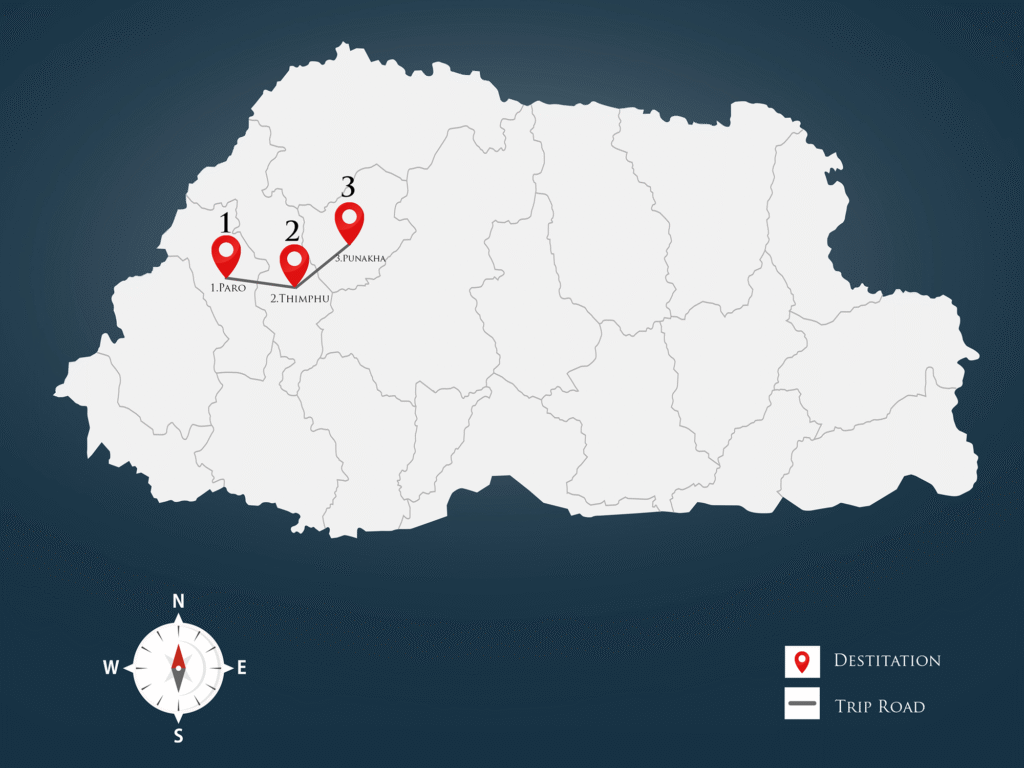
Official Trek Map
Explore unique experiences
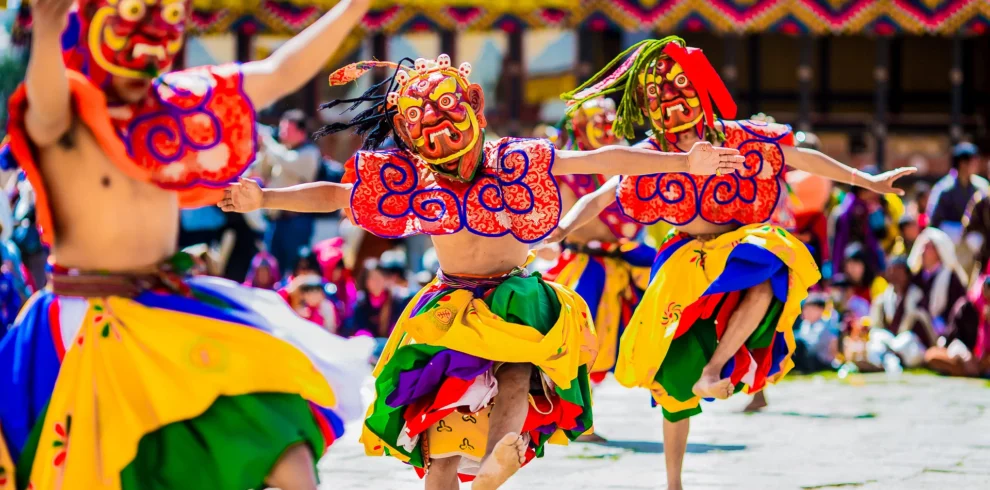
This 7-day Paro Tshechu Festival Tour will take you to experience one of the most popular festivals in Bhutan, as...
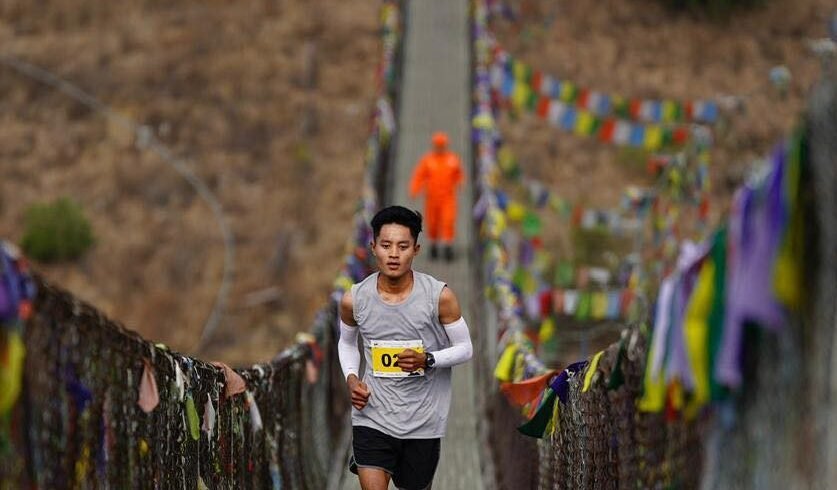
Marathon Date: 7 March 2026 The Bhutan International Marathon 2026 invites runners from around the world to experience the rare...
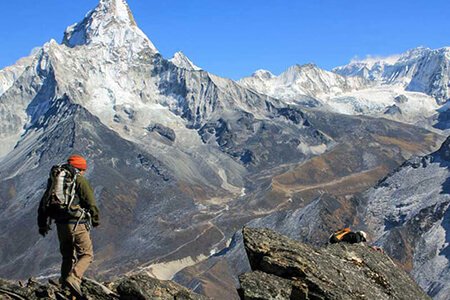
This 9-day Bhutan journey offers a seamless blend of adventure, spirituality, and cultural immersion. The itinerary combines the legendary Drukpath...
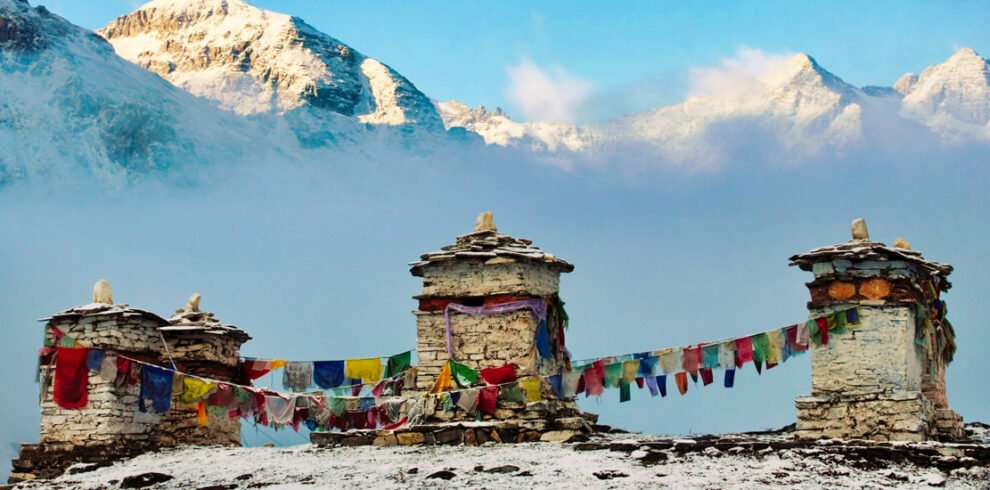
Bhutan’s Signature High-Altitude Adventure and Cultural Discovery This 13-day expedition through Bhutan combines the legendary Jomolhari Trek—a world-class Himalayan trail—with...
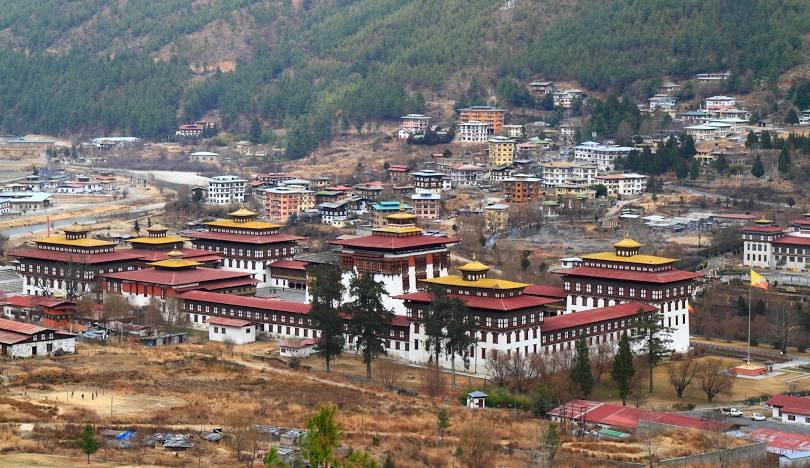
Thimphu, the capital city of Bhutan, is a unique blend of tradition and modernity set against a backdrop of scenic...
Experience Bhutan as a living sanctuary — a kingdom where more than 70% of the land remains forested, wildlife roams...