Snowman Trek – The Ultimate Himalayan Challenge
Laya-Lingshi Trek & Himalayan Cultural Odyssey — 18 Nights / 19 Days
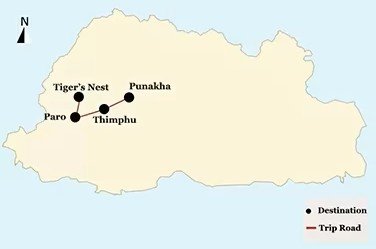
This 30-day Bhutan adventure is crafted for true explorers seeking to experience the untouched majesty of the Himalayas while immersing in Bhutan’s authentic culture. The journey combines high-altitude trekking across some of the kingdom’s most remote regions with serene cultural explorations of Paro, Thimphu, and Punakha. From the sacred peak of Mount Jomolhari to the legendary hot springs of Gasa, this itinerary delivers a once-in-a-lifetime blend of nature, spirituality, and tradition — a signature Bhutan trekking tour designed for discerning travelers and adventure seekers alike.
Places You’ll Visit
Arrive at Paro International Airport with majestic mountain views.
Visit Kyichu Lhakhang, one of Bhutan’s oldest temples, and Rinpung Dzong.
Evening: Stroll through Paro town and meet your guide for a trek orientation.
Overnight: Paro
This picturesque region in the kingdom is covered in fertile rice fields and has a beautiful, crystalline river meandering down the valley. Paro has more of historical sites, high-end tourist resort and many souvenir shops for shopping including world famous Takstang. Taktsang Monastery (Tiger Nest Temple): is Bhutan’s most iconic landmark and religious Buddhist site in the world. The name Taktsang translates to “The Tiger’s Nest”. The temple is one of the holiest sites in Bhutan which clings impossibly to a sheer cliff face 900 meters above the valley. Although good trekkers can make it to the top in two hours, most of the guests take whole day to complete the hike. Kyichu Lhakhang: Temple considered sacred Jewel of Bhutan was established by the Buddhist King Songstsen Gampo of Tibet to overcome the giant ogress that laid across Tibet and Himalayas preventing the spread of Buddhism. The king is believed to have built the temple at the left foot of the enormous ogress. Kichu Lhakhang was among 12 temples in Bhutan out of 108 temples said to have been constructed over single night. Kichu Lhakhang was initially small in size however later, the temple expanded both in grandeur and size to its form that we see today. Hot stone bath with dinner at the farmhouse: Hot stone bath is very unique to Bhutan and offers great medicinal values. In most cases, the bathtub is made of wood, placed on a ground level in quiet hut for the privacy. A couple can get into one bathtub to soak. Enjoy the great ancient techniques of curing body aches, joint pains and harness many other values. This is on additional cost check with guide/driver.
The Drukgyel Dzong was built in 1654 by the Zhabdrung to commemorate one of the many war victories against the Tibetans. Over the centuries, it guarded the trail from Tibet into the Paro valley. We will drive to Shana. Just before reaching our trekking starting point, we will have to pass through an army check post, where your guide will produce your trekking permit. The trail from Shana to Thangthangkha is a very rocky series of small ups and downs along the Paro Chu and can be very muddy if it rains. About 2 ½ hours into the trek, you will come at a junction where a trail branches to go to Tibet. Don’t go to Tibet
Distance: 16k, Walking time: 6h, Sleeping altitude: 4100m. Today you will come across small sparse settlements, and herds of yaks. You will also be crossing the tree line (4000m). Our camp at Jangothang will bring us face to face with the majestic Chomolhari. Jangothang means the land of ruins; you will see ruins of some old settlements, which no one seems to know much about.
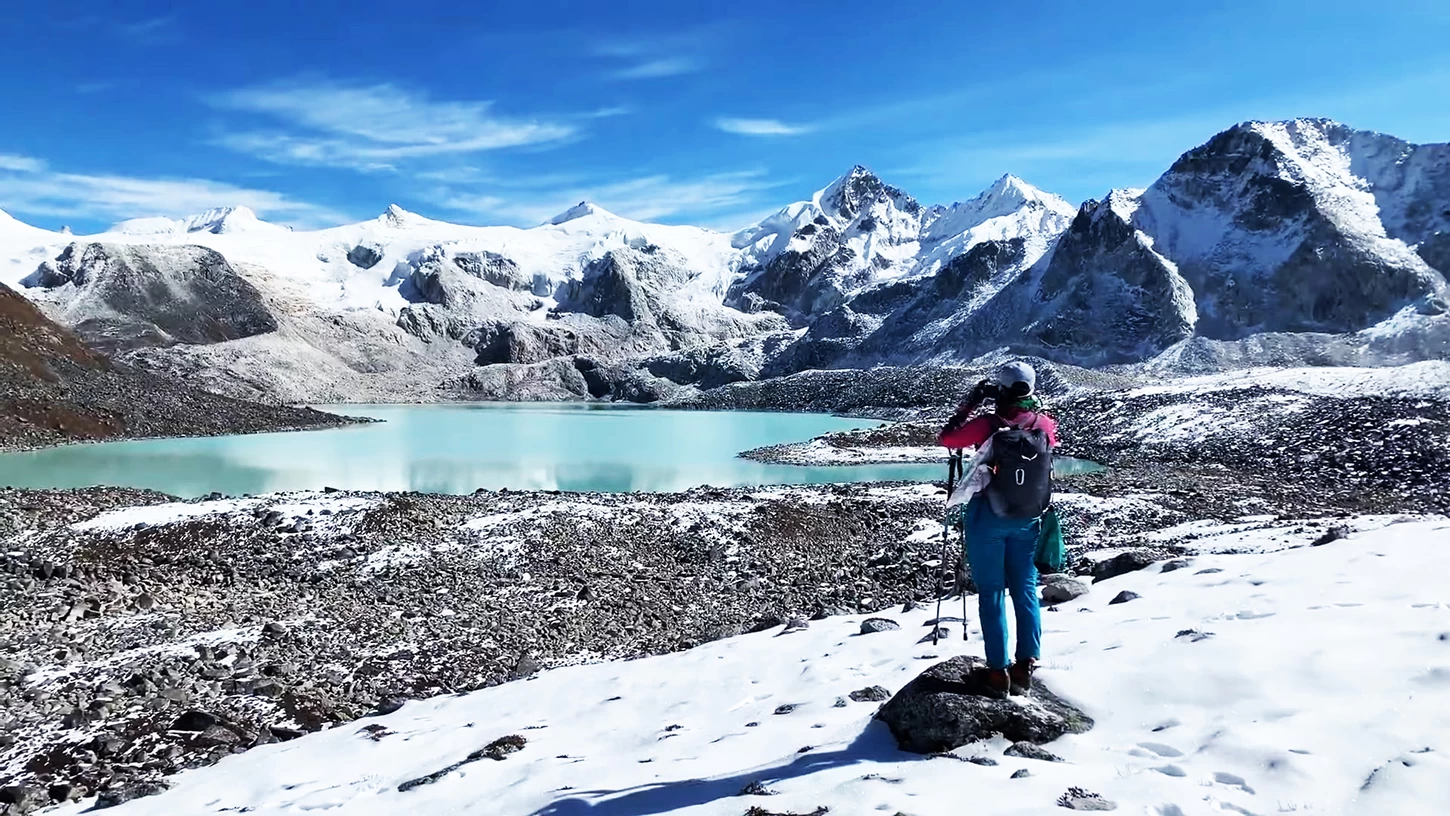
Acclimatization and rest day. A good optional hike is to climb to the Tshophu Lake at 4300m, which is about an hour and a half from Jangothang.
Distance: 17k, Walking time: 7h, Sleeping altitude: 4040m, Pass to cross: Nyele La, 4890m, sleeping altitude: 4010m. Heading uphill from Jangothang we cross the first of the many passes. 4 hours of uphill climbing will take us over the very windy Nyele La pass at 4090m. Scree makes it a little tricky to go down the pass on the other side. Lingshi dzong will soon be visible in a distance.
Distance: 12k, Walking time: 4h, Sleeping altitude: 3880m. Since today’s hike will not be as long, we can afford to wander around a bit. We will start off by visiting the Lingshi dzong, built on a commanding hill by the Shabdrung in the 1600s. About 3 hours into our trek is the dramatic village of Gangyul, surrounded by a natural amphitheater of cliffs. Our camp is in windy Chebisa, a small village with 2 storey stone houses
Distance: 16k, Walking time: 6h, Pass to cross: Goku La, 4350m, sleeping altitude: 4000m. Two hours of climbing from Chebisa will get us over the Goku La pass at 4350m. From the pass, we descend into a rhododendron filled valley and continue past some yak herder camps to Shakaypasa.
Distance: 17k, Walking time; 7h, Pass to cross: Jari La, 4747m, sleeping altitude: 4050m. An early morning start will get us on the way to Jari La pass at 4747m. From the pass, it is all the way downhill into the picturesque valley of Tsharijatha where herds of takin (the national animal of Bhutan) are normally seen in the summers. From here a small climb will take us to our camp at Tsheringyangu.
Distance: 18k, Walking time: 7h, Pass to cross: Sinche La, 5015m, sleeping altitude: 4160m. Snow Leopard country. Being highly elusive animals, it is very rare to spot one but their paw marks can be seen occasionally. Starting early, a strenuous hike will get us over the Sinchey La, the highest pass on our trek. Descending to Limithang we’ll see the snow-covered peak of Gangchenta (6840m) and the glacially carved Gangchenta valley. Gangchenta means Great Tiger Mountain.
Distance: 10k, Walking time: 5h, Sleeping altitude: 3915m. Since we are nearing Laya, we will come across Layaps going to tend to their yaks. We will be entering Laya from the west, through narrow cobblestone paths between houses, to camp in the wheat field that belongs to a friend.
One can go up to the village of Laya at 3800 m or just laze around at camp. This day will help us acclimatize before crossing the tree line.
Distance: 21k, Walking time: 8 hrs, Sleeping altitude: 4,285 m. Following the river downstream for a while and heading east will lead us to Rodophu. Certain sections of the trail are washed away by a frequent landslide making us negotiate the trail over huge boulders. Rodophu is a small, narrow and rocky valley used by the people of Laya when they migrate with their Yaks.
Distance: 16k, Walking time: 6 hrs, Sleeping altitude: 4800m. Climbing out of the Rodophu valley, we will be out in the open. There is no vegetation except sparse short grass. Keep your eyes on the lookout for Blue sheep. This is also a snow leopard territory. At our camp, we come face to face with the Ganglakarchung, the sight overwhelming.
Distance: 18k, Walking time: 7 hrs, Pass to cross: Karchula pass 5,215m. Sleeping altitude: 4100m. From our camp, the climb up to the Karchula pass (5,080 m) is long and hard. From the pass, the view is spectacular with the Tarina lakes in the northeast flanked by Masagang, Tsendagang, and Terigang. It is steep downhill from the pass, so if you have bad knees, be careful and remember to go slow. Our camp is in the valley on the banks of the Tarina stream.
Distance: 12K, Walking time: 6 hrs, Sleeping altitude: 4160m. The day is much easier as the path follows the river downstream along the valley. A climb of about 400 m uphill after lunch will take us to the village of Wochey.
Distance: 18k, Walking time: 7 hrs, Pass to cross: Kechey la pass, 4661m, Sleeping altitude: 3,730m. The trek starts through juniper and fir forests and then through rhododendron bushes. We climb up to Kechey la pass (4,580 m) where one can have a great view of the mountains. From the pass, we climb down to the village of Tega made up of 2 houses. Walking along the sandy riverside, we can see stunning views of Table Mountain. Follow the river, the main tributary of Pho Chu, until Lhedi village, where we will camp in from of the community school.
Distance: 16k, Walking time: 6 hrs, Sleeping altitude: 4145 m. The trek continues following the river, rising gradually to Choezo village. The valley was washed away by the glacial flood of 1994, forming the dramatic landscape. A bridge will finally take us to Thanza at 4,000 m on of the remotest human settlements on the face of the earth.
One can walk around or climb up the ridge to see the view of the lakes and mountains. Spend the day visiting village houses and meeting the local people. Short hikes can be taken around the camp area. Overnight at camp
Distance: 18k, Walking time: 6-7 hrs, Sleeping altitude: 4500m. Today’s trail passes through Jezela pass at 5050m and gives wonderful experience of climbing high passes. The camp will be a pitch at Tsochena. Overnight at camp.
Distance: 14k, walking time: 4-5hrs, sleeping altitude: 4880m. The trail crosses Lojula Pass at an altitude of 4940 meters. Overnight at camp.
Distance: 15k, walking time: 4-5hrs, sleeping altitude:4465m. The trail crosses Rinchenzoe Pass at an altitude of 5140 meters. Overnight halt at camp.
Distance: 20k, walking time: 7-8hrs, altitude: 4200m. The trail crosses Tampela Pass at an altitude of 4550 meters. And the Umtso Lake, which is famous for the religious treasures, that Terton Pamalingpa found there. Overnight halt at camp.
Distance: 14k, walking time: 5hrs, altitude: 3589m. The trek is downhill all the way through stunted Rhododendron trees. The camp is situated near the Nika Chu River. Overnight halt at camp.
Distance: 23k, walking time: 6-7hrs, sleeping altitude: 2900m. This is the last day of walking. The trail passes through the agricultural fields and the village of Sephu before seeing off our trekking crew at Chazam, where our transport will be awaiting us. Drive to valley of black-necked crane and relax at your hotel. Overnight in Phobjikha
The valley of black necked cranes and rhododendron and is often referred as Asian Switzerland. The natural beauty of the Phobjikha, beautiful home stays and nature adds more value to experience the living style, food habit and culture of the Bhutanese people. Gangtey Nature Trail: It is a short and relatively easy trek with several beautiful villages and monasteries en route. It offers beautiful views of the country with mostly gentle, forested slopes. The best time for this trek is between September-May, walk not recommended on rainy days. Gangtey Gompa: The temple built over hill top, headed by Gangtey Tulku the reincarnation of Pema Lingpa. Annual festival of Gangtey is performed in the temple courtyard every year. This is also the place for black necked crane’s festival held every year on 11-Nov, coinciding with His Majesty’s Fourth King’s Birthday. Crane center: This place is run by the Royal Society for Protection of Nature (RSPN) and has an observation room with high-power telescopes and good scope for spotting the famous Black Necked Cranes which migrates to the region during winter. It also displays information about the history of the region. Farmhouse visit with dinner with locals: This experience is a particularly fun and spontaneous way to connect with the local community and learn about Bhutanese culture and way of living.
As we say good bye to the Asian Switzerland, we will take the journey to Punakha crossing over Lawala & Wangdue. The entire stretch of drive will refresh your mind and give you second chance to enjoy the great snowcapped mountain views of the Himalayas. The road descends into Wangdue and Punakha taking us to one of the warmest places of Bhutan. Khamsum Yulay Namgyal Lhakhang- The temple stands majestically on a strategic ridge above the Punakha valley. It is a splendid example of Bhutan’s fine architectural and artistic talent. The hike to the temple is about 45 minutes one way uphill. It offers amazing views of Punakha valley and Mochu river. Visit the most beautiful Punakha Dzong: Built in 1637 by Zhabdrung Ngawang Namgyal, the Dzong was named Druk Pungthang Dechen Phodrang (Palace of Great Happiness). Punakha is still the winter residence of Je-Khenpo religious head of Bhutan. King Jigme Dorji Wangchuck convened the first National Assembly here in 1952. This is one of the finest and must see Dzongs of Bhutan. The Dzong stands inbetween meeting point of two rivers, Phochu and Mochu making the most photogenic Dzongs of Bhutan. Enjoy the walks on the suspension bridge: Punakha suspension bridge is considered one of the longest of its kind in Bhutan. The bridge connects the dzong with the villages Shengana, Samdingkha and Wangkha on the other bank of the Po Chhu river. In these small villages, locals sell their wares in tiny, traditional shops. Visitors can stop here for a quick and authentic view of true Bhutan. In order to access the suspension bridge from the dzong, one must walk past the King’s palace and the cremation ground.
We will take our journey back to Thimphu crossing over Dochula. The entire stretch of drive will refresh your mind and give you second chance to enjoy the great snowcapped mountain views of the Himalayas from Dochula. Hike to Chimi Lhakhang, the temple of fertility: This temple is known as the temple of fertility. It is widely believed that childless couples can visit this temple to pray for better fertility to conceive the child. There are stories and incidences that many visitors dream came true however one must truly need to believe and follow the lama’s instruction. The hike though the lovely villages of Mesina gives truly amazing experience. Enjoy the gentle walks from the road head. Visit Lamperi Botanical Garden: The park has many varieties of plants, herbs, birds and animals. If you visit between April and June, you can find about 38 out of Bhutan’s 46 species of rhododendrons and spot some of the 220 species birds. This park is one of the must visit place for birds and nature lovers. You may enjoy the hot packed lunch here if you had planned picnic. Dochula pass 3150m: The pass is at a popular location as it offers a stunning 180 degree panoramic view of the Great Himalayan mountain ranges. The view is especially scenic and very clear on winter days with snowcapped mountains forming a majestic backdrop to the tranquility of the 108 chortens gracing the mountain pass. Visit the weekend market (Thu-Sun): An interesting well organized permanent set of stalls built for vegetable vendors across the country. It’s open from Wednesday to Monday and closed on Tuesdays. One can find wide range of local vegetables and fruits. Other side of the river is place for indigenous goods and handicrafts section, where locally produced goods, including religious objects, cloth, baskets and hats etc from various minority groups are sold here. These shops are open from Friday to Sunday only. In the evening we will explore the city by walk: If time permits, walking through the city gives you immense joys and understanding of modern city. Good option for imported garments and local souvenir, beside unique local handicrafts. Thimphu offers mixed style of personalities. Take the street walk in Thimphu- only city in the world without traffic lights. Visit Tashichho Dzong: Houses the throne room of His Majesty the King of Bhutan and government secretariat buildings, beautiful arts and crafts, built in 17th century. Visitors are open for an hour in the evening and closed during official meeting or gathering.
Thimphu- This bustling little city is the main centre of commerce, religion and government in the country. Thimphu is the most modern city with an abundance of restaurants, internet cafes, nightclubs and shopping centers. However it still retains its cultural identity and values amidst the signs of modernization, often referred as world only city without traffic lights. Cheri Monastery: In 1627 the first Buddhist Monastic School for Bhutan was started by Shabdrung in Cheri, which to these days has become a Meditation center for higher level Buddhist studies. The Monastery buildings are old and still contains many sacred relic from past. Drive pass by Memorial Chorten: It is located close to the center of Thimphu city and is one of its most iconic monuments. Visitors will find elderly Bhutanese people circumambulating the Chorten throughout the day. The National Memorial Chorten was built in memory of Late Third King of Bhutan and dedicated to World Peace. Third King is regarded as father of modern Bhutan. Visit Buddha viewpoint: The Buddha Dordenma is located at a top of the hill in Kuensel Phodrang Nature Park and overlooks the southern entrance to Thimphu valley. Changangkha Lhakhang: Changangkha Lhakhang is located at the lower part of Motithang in upper Thimphu, on a small hill overlooking the Thimphu Town below. The main relic of Changangkha Lhakhang is the Chenrigzi in an 11 headed thousand arms manifestation. Visit textile museum: The National Textile Museum which opened in June 2001, is worth a leisurely visit to get to know the living national art of weaving. Changing exhibitions introduce the major weaving techniques, styles of local dress and textiles made by women and men. The small shop features work from the renowned weaving centers in Lhuntshe Dzongkhag, in north-eastern Bhutan. Each item is leveled with the name of the weaver and price. The textile museum’s exhibition are centered around six major themes – warp pattern weaves, weft pattern weaves, role of textiles in religion, achievements in textile arts, textiles from indigenous fibres and the royal collection.
Departure from the Kingdom of Bhutan
- Unbeatable Value Assurance - ( Discover extraordinary adventures )
- Effortless Reservation Process - ( No booking hassles )
- Transparent Pricing, Zero Surprises - ( No hidden costs )
- Expertise Beyond Measure - ( Team of seasoned experts )
- Your Joy, Our Priority - ( Happiness Commitment )
Official Trek Map